Australia’s Solar Support Now Reaches 1 MW. What Changes on 1 October.
Australia has expanded federal support for larger rooftop and on-site solar projects.
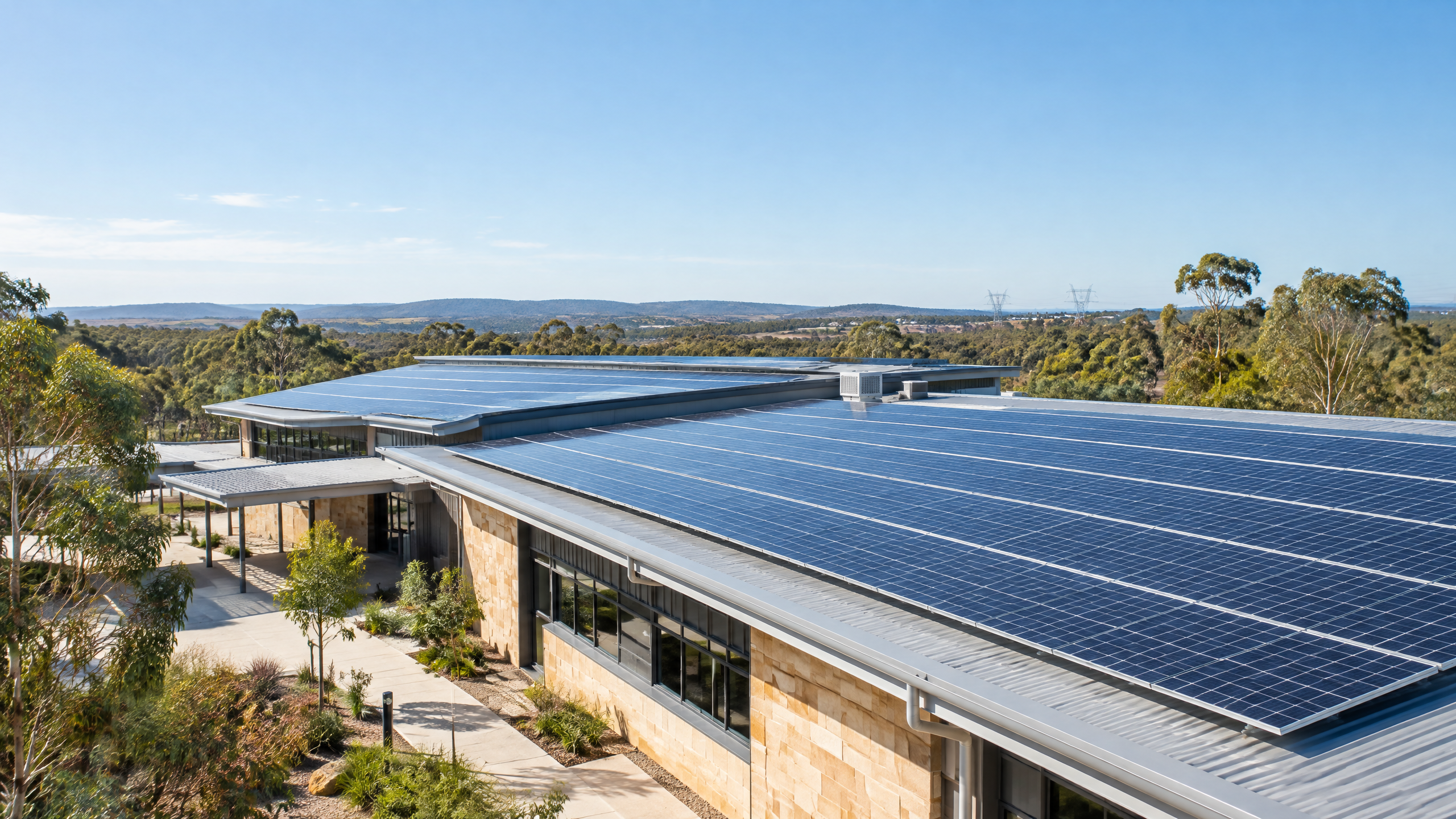
From 1 October 2026, eligible solar photovoltaic systems above 100 kilowatts and up to 1 megawatt can use the Small-scale Renewable Energy Scheme, or SRES. Until now, the scheme’s solar limit was 100 kW. The change is now legislated, not merely proposed.
That sounds like a major household-solar announcement. In practice, it is mainly about the large roofs above warehouses, farms, schools, hospitals, community facilities and commercial sites.
For those projects, the change may alter the economics. For typical household systems, it creates no new or larger residential entitlement.
What has changed?
The SRES is the federal scheme behind small-scale technology certificates, usually called STCs. When a qualifying solar system is installed, the certificates can commonly be assigned to an installer or retailer and reflected in the upfront price.
The amended regulations expand the solar-PV limit from 100 kW to 1 MW for eligible systems installed from 1 October. In the new 100 kW to 1 MW band, the Clean Energy Regulator says certificates will use a fixed five-year deeming period.
There is one timing detail worth understanding. A project installed from 1 October can be eligible under the new rules, but the Clean Energy Regulator expects the application process to open only in mid-to-late November while its systems are updated. That does not mean every project qualifies automatically. It means the eligibility pathway will exist for projects that meet the conditions.
Projects still need accredited products and installers, appropriate approvals and connection arrangements, and supporting evidence. A 1 MW maximum total site capacity also applies where related systems, extensions or upgrades are involved.
Why this matters beyond the commercial market
Australia’s solar story is often told through household rooftops. That is fair. Homes have driven a remarkable amount of the country’s solar uptake.
But many large sites also use electricity when the sun is up. A farm’s pumps, a school’s air conditioning, a refrigerated warehouse, a factory or a shopping centre can have a large daytime load and a roof to match. Until now, a 200 kW or 500 kW project sat outside the SRES solar limit.
The new rule does not guarantee that every larger system will stack up financially. Certificate values move, connection costs differ, and a site’s own load profile still matters. A system that exports heavily at low-value times may have a different case from one that directly offsets substantial daytime electricity use.
Still, making a national certificate pathway available to qualifying projects in this size range is a meaningful shift. It may encourage more solar on roofs that are already built, close to where electricity is used.
For households, the practical lesson is less about rushing to change an existing system and more about understanding the wider grid. More commercial solar can add to the midday abundance already created by household rooftops. That makes storage, flexible demand, smart EV charging and sensible tariff design more important, not less.
A quick reality check for home solar owners
If you own a standard rooftop system, do not assume the 1 MW headline means your current STC treatment has changed. It has not.
The useful questions remain familiar: is the system producing as expected, can you see that in monitoring, and does your retailer plan still suit your pattern of imports and exports?
The best way to respond to a changing energy market is not to chase every headline. It is to keep accurate records, monitor safely from the ground or through your app, and compare offers on your own consumption pattern.
The storage context: projects that are already operating
The rule change arrived in the same week that NSW said four firming projects supported through its second Electricity Infrastructure Roadmap tender are complete and operating. They include the 500 MW / 1,000 MWh Liddell battery, the 415 MW / 1,660 MWh Orana battery, the 65 MW / 130 MWh Smithfield battery, and a 95 MW Enel X virtual power plant with at least two hours of demand response.
These numbers are worth reading carefully. MW describes power, or how quickly a battery can charge or discharge. MWh describes stored energy, or how long it can sustain that output. Liddell’s 500 MW / 1,000 MWh rating equates to two hours at its rated power. It is not 1,000 MW of generation, and the announcement does not prove a particular household bill reduction.
What it does show is that the system is adding ways to shift energy or reduce demand when it is needed most. That is important as daytime solar grows and older coal stations retire.
A battery-buying check worth making this week
The other practical development is more immediate for anyone signing a battery contract.
The Clean Energy Council has suspended seven NEOVOLT BW-BAT-9.6P battery variants from its approved-products list. The CEC says labels on Australian-supplied units were inconsistent with the testing and certification documents, and the manufacturer could not distinguish the imported variants. From 15 September, installations using those listed models cannot create STCs.
The CEC is clear that this is not a recall and was not based on an identified product-safety issue. It does not establish that already installed batteries are faulty. Existing owners should speak with their retailer, installer or the manufacturer if they need model-specific information.
For prospective buyers, the lesson is straightforward: before you sign, ask the installer to identify the exact battery model on the quote and check that it is on the current approved-products list. Do not rely on a generic brand name or an old brochure. A listing change can affect the discount shown in your quote.
System Health Diagnostic Corner: keep the basic facts together
This week’s task is administrative, not technical.
Find your original solar quote, final invoice and commissioning paperwork. Record the panel capacity in kW, inverter make and model, battery make and model if relevant, installation date, installer contact details and monitoring login. Keep them somewhere you can find without accessing electrical equipment.
Those details are useful for a warranty enquiry, qualified servicing, an upgrade or an approved-product check.
The bigger picture
The new 1 MW SRES threshold will not transform every roof overnight. The application process is still being built, eligibility is conditional, and project economics remain site-specific.
But it is a clear sign of where Australian solar policy is heading. The next phase is not only about putting more panels on homes. It is also about using the roofs above the places where people work, learn, store goods and provide services.
That should create more solar opportunity. It should also sharpen the conversation about connection, storage and flexible electricity use. The hardware matters, but the quality of the plan around it matters just as much.
Get the next issue in your inbox.
One email a week. Written by someone who works inside the industry.
You might also like
Australia Has Now Installed 100 Community Batteries. Here’s Why That Matters Even If You Don’t Own One.
Australia has now installed its 100th community battery under the Australian Renewable Energy Agency’s Community Batteries Funding Initiative. That is a small number compared with the hundreds of thousands of batteries being installed in homes, but it marks an important shift in the way rooftop solar is starting to work.
Your Solar System Is Becoming Part of the Grid. South Australia Just Tested That.
It is easy to think of rooftop solar as a private appliance. Panels make electricity. Your home uses it. Anything left over goes to the grid.
Half a Million Home Batteries Is a Milestone. The Hard Part Is Making Them Work Together.
Before we get into the news, a quick note. Watts Weekly missed its usual Wednesday edition last week. Rather than publish two thin posts or pretend nothing happened, this is one combined catch-up covering the two weeks from 3 to 16 August.